

You have found yourself Googling “immigration lawyer Melbourne” at some point in the evening, scrolling through nearly identical service pages and wondering how on earth to tell the good from the great. You are not alone.
Australian immigration law is genuinely complex. A wrong form, a missed document, or a misunderstood condition can cost you months of waiting and thousands of dollars in fees that you will never get back. The stakes are high, and the market is crowded. Before you sign a retainer or lodge a single application, use this checklist to ask the right questions and protect yourself.
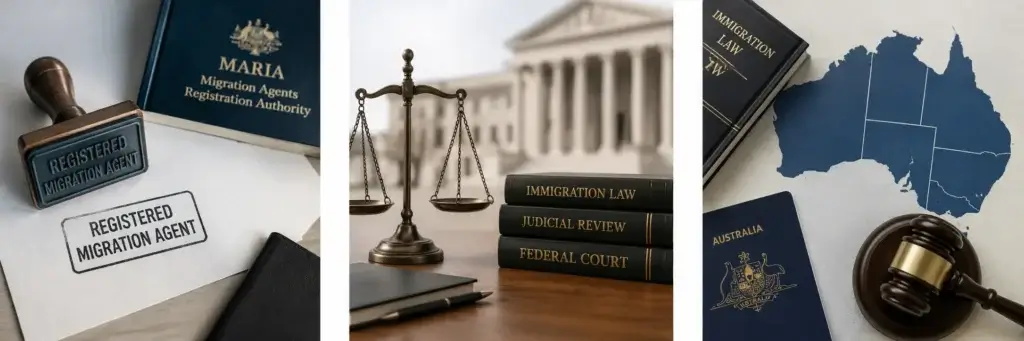
Question 1: Are You a Registered Migration Agent, an Immigration Lawyer, or Both?
This distinction matters more than most people realise.
In Australia, there are two types of professionals legally authorised to give immigration advice for payment:
- Registered Migration Agents (RMAs) are regulated by the Office of the Migration Agents Registration Authority (OMARA). They can prepare and lodge visa applications and represent clients in some Tribunal proceedings.
- Immigration Lawyers are solicitors admitted to practice in an Australian state or territory. They can do everything an RMA does, plus advise on judicial review and represent you in the Federal Circuit and Family Court or the Federal Court of Australia.
The critical difference is what happens if things go wrong. If your visa is refused and your matter escalates to the Administrative Review Tribunal or to Federal Court, you need a lawyer, not just a registered agent.
At Amity Lawyers, our team combines legal qualifications with migration expertise, so your matter never needs to be handed off mid-stream.

Question 2: Who Can Represent Me If My Visa Is Refused or Cancelled?
Ask this question upfront, and pay close attention to the answer. A credible firm will:
- Explain your merits review rights clearly and in plain English
- Confirm that their lawyers are authorised to appear at Tribunal level
- Give you an honest view of whether your case has grounds for review
- Outline realistic timeframes and cost estimates for each stage of the process
If a firm cannot clearly explain the review pathway, or hedges on whether they can represent you at Tribunal, that is a red flag worth taking seriously.
Understanding your rights when a visa is cancelled or revoked is critical. Our visa refusals and cancellations page walks through the key grounds for review and what to do if the Department has already issued a notice of intention to cancel.
Question 3: Have You Handled Cases Like Mine Before?
Experience in one visa category does not automatically transfer to another. Be specific when you ask:
- For a partner visa: How many have you handled? Have any been refused, and were they successfully appealed?
- For an employer-sponsored visa: Do you understand the new Skills in Demand (SID) visa framework, including all three streams introduced in December 2024?
- For a student or graduate visa: Can you explain onshore versus offshore lodgement rules and the current work condition requirements?
- For a visa refusal or cancellation: Have you taken matters to the Administrative Review Tribunal? What were the outcomes?
Relevant experience does not guarantee success, but it dramatically reduces the risk of avoidable errors that experienced practitioners simply do not make.
Question 4: What Should a Free Consultation With an Immigration Lawyer in Melbourne Actually Cover?
The quality of a firm’s free consultation tells you a great deal about how they operate in practice. A genuinely useful session should include:
- A preliminary assessment of your visa options and eligibility
- An honest view of the strengths and weaknesses of your application
- A clear explanation of the process and realistic timeframes
- A transparent breakdown of fees and what is included
- No pressure to sign anything on the day
Red flags to watch for during a consultation:
- The session is rushed and does not address your specific circumstances
- You are given a quote before your situation has been properly understood
- The firm cannot name the specific visa subclass or pathway most suitable for you
- Questions about visa refusal or cancellation seem to make the adviser uncomfortable
Question 5: What Are the Full Costs, and When Could They Increase?
A reputable Melbourne immigration lawyer will help you understand the complete cost picture upfront. Here is how to frame cost against risk:
- Partner visas (subclasses 820/801): Government fees alone can exceed $8,850. A refusal means those fees are lost entirely, plus re-lodgement costs and further waiting periods. Professional fees are modest in comparison.
- Employer-sponsored visas (subclass 482 SID): From 1 July 2025, the Core Skills Income Threshold (CSIT) increased to $76,515 per annum. Nomination errors or salary compliance issues can invalidate an entire application at the nomination stage.
- Tribunal proceedings: If a matter escalates to review, costs increase significantly. Good advice early reduces the likelihood of reaching that point.
- Government fee increases: Visa application charges increased across multiple subclasses from 1 July 2025. Ask your lawyer whether planned fee changes affect your timeline.
The real question is not “can I afford legal advice?” It is “can I afford the consequences of not getting it?”
Question 6: What Are the Most Common DIY Mistakes in Melbourne?
Ask this question as a test. If the adviser knows their field, they will have a clear and specific answer. Here is what actually goes wrong:
Partner visas (subclasses 820/801):
- Insufficient evidence of a genuine and ongoing relationship
- Statutory declarations that are vague, inconsistent, or missing key detail
- Failing to notify the Department of changes in circumstances during processing
Employer-sponsored visas (Skills in Demand, subclass 482):
- Employer not yet registered as an approved sponsor before lodging a nomination
- Offered salary below the current income threshold (CSIT: $76,515 from July 2025)
- Occupation not listed on the Core Skills Occupation List (CSOL), which replaced all previous occupation lists in December 2024
Student and temporary graduate visas:
- Onshore lodgement attempted when the applicant is ineligible to apply onshore
- Bridging visa conditions misunderstood, resulting in unlawful status
- Switching courses without understanding the impact on visa conditions
If you are currently on a bridging visa while a matter is resolved, you can find a clear explanation of your options on our other visas page, including the differences between Bridging Visa A, B, and E.
Question 7: What Is Specific to Victoria and Melbourne?
This question separates generalist immigration firms from those who genuinely know the Victorian migration landscape.
Victoria runs its own skilled migration programme through the Live in Melbourne portal. For the 2025/26 programme year, Victoria has been allocated 3,400 skilled nomination places across subclasses 190 and 491, according to the Live in Melbourne portal.
Key points specific to Melbourne applicants:
- Subclass 190 (Skilled Nominated Visa): Requires a Victorian state nomination before lodging a visa application with the Department of Home Affairs. Invitation rounds occur throughout the year and are occupation-specific.
- Subclass 491 (Skilled Work Regional Visa): Available to applicants living offshore or working in regional Victoria. Applicants must commit to remaining in a regional area for at least three years.
- Melbourne industries with strong employer sponsorship demand: Healthcare, information technology, construction and engineering, financial services, and higher education.
For more on navigating the points-tested and nomination-based pathways in Victoria, see our detailed subclass 491 page

Before You Sign Anything
The immigration law market in Melbourne is active and competitive. There are many competent practitioners and a small number who are not. These seven questions are not designed to trip anyone up. They are designed to help you find the right fit, quickly and with confidence.
Australian immigration law changes frequently. Employer-sponsored salary thresholds, occupation lists, English language requirements, and state nomination programmes are all updated on a rolling basis. Staying across those changes is part of what a good Melbourne immigration lawyer does for you, so that you are not lodging an application against outdated requirements.
If you would like to speak with an immigration lawyer in Melbourne who will give you straight answers before you commit to anything, contact Amity Lawyers today. We work with families, skilled workers, and employers across Australia and internationally, and we will tell you honestly what your options are before you spend a dollar.
Frequently Asked Questions
1. What is the difference between a migration agent and an immigration lawyer in Melbourne?
A registered migration agent can prepare and lodge visa applications. An immigration lawyer can do the same, but is also authorised to represent you in the Federal Court and advise on judicial review if your visa is refused.
2. Can I appeal a visa refusal in Melbourne without a lawyer?
You can lodge a Tribunal review yourself, but complex matters involving legal arguments, character issues, or court proceedings require qualified legal representation. Getting advice early significantly improves outcomes.
3. What should I bring to a free immigration consultation in Melbourne?
Bring your current visa details, any refusal or cancellation notices, your employment and qualification documents, and a list of your specific questions. The more context you provide, the more useful the session will be.