
Imagine lodging an appeal against your student visa refusal and then finding out that no one is going to hear you speak. No hearing room, no video call, no chance to look a Tribunal Member in the eye and explain your side. That is the reality for a growing number of applicants since 18 May 2026, when the Administrative Review Tribunal (ART) gained the power to decide certain temporary visa refusals entirely on written submissions.
If that sounds daunting, you are not alone. We have spoken to dozens of students and former students in Melbourne who had no idea this change was coming. The short version: your written case now carries all the weight, and working with an experienced Australian visa cancellation lawyer is no longer a nice-to-have. For many people, it is the difference between staying in Australia and being told to leave.
What Changed and Why It Matters
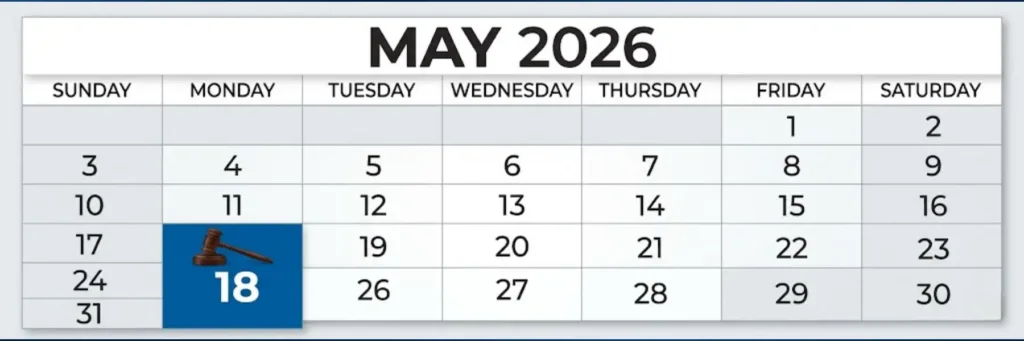
The Administrative Review Tribunal and Other Legislation Amendment Act 2026 received Royal Assent on 9 February 2026. Schedule 1 of the Act commenced on 18 May 2026, introducing a new Division 4A into Part 5 of the Migration Act 1958. This is the biggest procedural reform in Australian migration review in years.
In practical terms, the reform means:
- Student visa (Subclass 500) refusals are the first visa type to be reviewed on the papers, with no automatic right to an oral hearing.
- Other temporary visa categories are likely to follow. The legislation allows additional visa types to be prescribed by regulation.
- Permanent visa and protection visa decisions are not affected and will continue to receive oral hearings.
- The ART must consider all documents and written submissions provided by the applicant when making its decision.
- If you fail to respond to an ART information request within the specified timeframe (28 days for section 367F invitations, 14 days for section 367G invitations), the ART may dismiss your review application entirely.
This is a significant departure from how things worked under the former Administrative Appeals Tribunal (AAT), where applicants could almost always appear in person or by video to explain their case directly to a Tribunal Member.
Why This Matters for Student Visa Applicants in Particular
The timing of this reform is not coincidental. Australia’s student visa landscape has tightened considerably. According to ICEF Monitor, the refusal rate for higher-education student visas reached 32.5 per cent in February 2026, the highest monthly figure in 21 years of tracking (ICEF Monitor, April 2026). Applicants from South Asian countries, including India, Nepal and Bangladesh, have been disproportionately affected.
With more refusals being issued, more applicants are turning to the ART to challenge those decisions. The on the papers reform is designed, in part, to help the Tribunal manage a growing caseload more efficiently. But the consequence for applicants is clear: if your written submission is not strong enough, you may never get the chance to explain your case in person.
Previously, many student visa applicants relied on the hearing itself to clarify inconsistencies in their application, explain their genuine student intentions, or respond to a Tribunal Member’s questions about their financial situation. That safety net has largely been removed for student visa reviews.
How the New On the Papers Process Works
Here is a step-by-step overview of how a student visa refusal review now typically proceeds under the new framework:
- You lodge your ART review application within the relevant time limit (usually 28 days for onshore applicants). Strict deadlines apply, and missing them can permanently extinguish your review rights.
- The ART receives the Department of Home Affairs’ file, which includes all the material the Department relied on when refusing your visa.
- The ART may invite you to provide additional documents or submissions. This is your opportunity to address every ground for refusal in writing.
- The ART decides the matter on the papers, based entirely on the documentary record before it. No hearing. No opportunity to speak.
- If the ART is not satisfied it can determine the matter on the papers alone, the registrar may decide that an oral hearing is necessary. However, the burden has shifted. Your written submissions need to demonstrate why a hearing is required, not the other way around.
This process applies to applications lodged from 1 June 2026, as well as certain existing applications where the ART President had not yet constituted the Tribunal (Migration Amendment (Administrative Review of Student Visa Refusal Decisions) Regulations 2026).
If you are unsure whether your review is affected by the new arrangements, our ART appeal lawyers can check the status of your case and advise you on the process that applies.
What Makes a Written Submission Strong Enough to Win
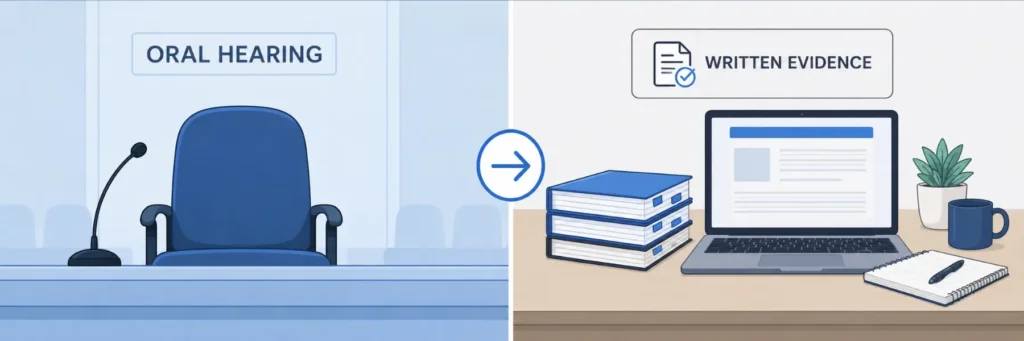
Under the old system, a solid oral performance at a hearing could sometimes compensate for gaps in the paperwork. That is no longer the case. Your written submission now needs to do all the heavy lifting.
A submission prepared by an experienced Australian visa cancellation lawyer will typically include:
- A clear legal argument structured around each specific ground of refusal, addressing the relevant provisions of the Migration Act and Migration Regulations.
- Indexed supporting evidence tied directly to each refusal ground. For example, if the refusal was based on doubts about your financial capacity, the submission will include updated financial evidence, bank statements, sponsor declarations and any other material that addresses the concern.
- Statutory interpretation where the Department has misapplied or misunderstood the law. The ART is not bound by the Department’s reasoning and can reach a different conclusion.
- Identification of procedural errors in the original decision. If the Department failed to follow required procedures or did not properly consider material you provided, this should be clearly articulated.
- A persuasive Genuine Student narrative that directly addresses each of the four Genuine Student questions, supported by documentary evidence about your circumstances, study history and career plans.
At Amity Lawyers, we treat every ART review as though there will be no hearing, because under the new rules, there very likely will not be.
Can You Still Request an Oral Hearing?
Yes, but the process has changed. Under the new framework, the ART registrar decides whether an oral hearing is warranted. You cannot simply request one as of right.
Your written submissions should include a clearly reasoned request explaining why the issues in your case cannot be adequately determined on the papers alone. For example, if credibility is genuinely in dispute, or if there are factual matters that require oral evidence, these arguments should be set out early in your submission.
The Tribunal can only dispense with a hearing where the issues can be adequately determined without one and it is reasonable in the circumstances to do so. But in practice, you should prepare on the assumption that your written materials will be the only thing the decision-maker reads.
What If You Lose on the Papers?
If the ART affirms the Department’s refusal, you may be able to appeal to the Federal Court of Australia on a question of law. Federal Court appeals have strict deadlines (typically 35 days from the date of the ART’s decision) and involve legal costs, so it is important to get advice quickly.
An appeal to the Federal Court is not a second merits review. The Court will only intervene if the ART made a legal error, such as misinterpreting the Migration Act, failing to consider a relevant matter, or denying procedural fairness.
If you have received an adverse ART decision, our appeals and cancellations team can assess whether a Federal Court challenge is viable in your circumstances.
How Is This Different From the Old AAT?
The biggest practical difference is straightforward. Under the AAT, almost every migration review applicant received an oral hearing. The Tribunal Member would read the file, ask questions, and give the applicant an opportunity to respond in real time. Many successful outcomes depended on what happened in the hearing room.
Under the ART’s new on the papers process, that opportunity may simply not exist. The decision will be made based on whatever is in the written file. If your submissions are incomplete, poorly structured, or fail to address the refusal grounds, you may lose without ever having had the chance to speak.
This is why the reform has fundamentally shifted the value proposition for legal representation. A well-prepared written submission by an Australian visa cancellation lawyer is no longer just helpful. For many student visa applicants, it is now the single most important factor in the outcome of their review.
What You Should Do Right Now

If your Student Visa (Subclass 500) has been refused, or if you have received a Notice of Intention to Consider Cancellation, time is critical. Here are the steps to take:
- Do not delay. ART review deadlines are strict. Once they pass, your right to review may be lost permanently.
- Gather all your documents. Every piece of evidence that supports your case should be collected, organised and ready to submit.
- Get legal advice before you lodge. Under the new system, your first written submission may be your only chance to make your case. An immigration lawyer can ensure it is structured, comprehensive and persuasive.
- Do not assume you will get a hearing. Prepare as though the written submission is the final word, because it very likely will be.
If you are a current or prospective Student Visa (Subclass 500) applicant and you want to understand how the new on the papers process affects your situation, contact Amity Lawyers for a consultation. Our Melbourne-based immigration lawyers handle ART reviews, Federal Court appeals and visa cancellation matters across Australia.
FAQs
Which visa types are affected by on the papers review? Student Visa Subclass 500 refusals are the first category affected. The legislation allows additional temporary visa types to be prescribed by regulation, so the scope is expected to expand.
Can I still request an oral hearing? You can request one, but the ART registrar decides. Your written submissions must first demonstrate why a hearing is necessary. Prepare on the assumption that the decision will be made on the papers alone.
What makes a written submission strong enough to win without a hearing? Legal argument structured around each refusal ground, evidence indexed to each issue, statutory interpretation, and identification of any procedural errors in the original decision. A generic statement will not be enough.
Can I appeal further if I lose? Yes, you can appeal to the Federal Court on a question of law, but strict deadlines and legal costs apply. Not every unfavourable outcome is appealable.
How is this different from the old AAT? The AAT almost always gave applicants an oral hearing. The ART can now decide certain temporary visa reviews entirely on written submissions without any hearing at all.